Showing posts with label Kabul Shahi. Show all posts

Monday, June 28, 2021

Turk-Shahi (565 - 850 AD) and Hindu-Shahi dynasties (850- 1026 AD) and Coins


The Shahi dynasty ruled the Middle kingdom of India which included portions of  Kabulistan and the old province of Gandhara (now in northern Pakistan). Their rule began with the decline of the Kushan Empire in the 3rd century and continued till the early 9th century. 

The Shahis of Kabul / Gandhara are divided according to two eras into two former non-muslim dynasties in Kabul, the Buddhist-Shahis or Turk- Shahis  and the Hindu Shahis. The Buddhist kingdom was known as ''Turk Shahi'' and reigned between 565 and 850 AD and had Kapisa and Kabul as their capitals. Around 850 AD, the kingdom adopted Hinduism and began to be known as ''Hindu- Shahi''. In 870 AD, they moved their capital to Udbhandapur. The Hindu-Shahi ruled from around 850 to 1026 AD.                                         

Coin of Spalapati Deva, Hindu-Shahi, 500-900 AD
 

The term ''Shahi'' was the royal title of this dynasty and not its clan or ethnological name. 

Between both the Turk-Shahi and the Hindu- Shahi, they effectively blocked the eastward expansion of Islamic invasions for more than 400 years and contributed to the history of India.

The Turk-Shahis / Buddhist- Shahis resisted the eastward expansion of the Caliphate for more than 240 years. 


                The Turk Shahi Tamgha
           
                                             
 Map showing the Turk-Shahis in Kabulistan            
 
                                            
Seated Maitreya, 7th-8th century AD, near Kabul, Afghanistan, Shahi sculpture

The Hindu-Shahi (850 -1026 AD) held sway over the Kabul valley, Gandhara and western Punjab. Details have been assembled from chronicles, coins, stone inscriptions and temple ruins by researchers as their accounts have been destroyed systematically and are not available today. 


    Map of Hindu-Shahi kingdom, 900 AD

 In 870 AD they lost Kabul to the Saffarid dynasty, but by 879 AD, the Hindu-Shahi recaptured it. According to ''The Mazare Sharif Inscription of the Time of the Shahi Ruler Veka'', recently discovered from northern Afghanistan and reported by the Taxila Institute of Asian Civilizations, Islamabad, Veka conquered northern regions of Afghanistan and established a Shiva temple there. He also issued coins.


The Amb Hindu temple complex, built by the Hindu-Shahi Empire


During the Turk Shahi period, the Islamic invasions started in 643 AD and lasted for over 240 years till 879 AD . The notable defeats suffered by aggressor were recorded in 643 AD, 653 AD , 683 AD, 692 AD, 697 AD and 717 AD which resulted in annihilation of the invaders every time they attacked. The capital was shifted from Kapisa to Kabul in 794 AD. Kabul suffered a temporary eclipse in 870 AD when the king of Kabul was treacherously killed, however Kabul still could not be captured.

Around this time, the courts of Shahis denounced Buddhism and became an adherent of Hindu faith. Thus, the Hindu Shah dynasty was founded in 850 AD. In 879 AD, the king of Kabul was killed in battle and in 890 AD, the capital was shifted to Udbhandpur on the River Indus. 


Ruins at Sindhu Temple, Kafir Kot, Khyber Pakhtunkhwa, Pakistan 

The ruins of Temple complexes are still existing in what is called Kafir Kot in today's Pakistan. These two locations known as Bilot Kafir Kot and Tilot Kafir Kot are at a distance of about 50 km apart in the Dera Ismail Khan district of the Khyber Pakhtunkhwa province, overlooking River Indus


Ruins of Hindu temple at Bilot, Dera Ismail Khan, Pakistan   


Sculpture from Kafir Kot at the British Museum

Maharaja Jayapala (946 to 1001 AD). He was one of the greatest rulers and is known for his struggles in defending his kingdom from the Turkic rulers of Gazni.


Ruins of the majestic temple that still stands today. 


Sculpture from Kafir Kot at the British Museum


Sculpture from Kafir Kot at the British Museum


Temple ruins at the Kafir Kot temple complex
   

 In 994 AD, the Ghazanavid Empire fell into the hands of Mahmud of Ghazni. Mahmud led his first invasion against Udbhandapur in 1001 AD. Jayapala was captured. However, the territory was not annexed as great damage was inflicted on Mahmud's army, which made him incapable of ruling the vast land. For several years this battle between Mahmud and the Shahi dynasty continued. Battles of 1005 AD, 1008 AD,1013 AD, 1015 AD, 1021 AD and 1026 AD are significant and the valour of subsequent Hindu Shahi kings have been described by many historians. For more than 150 years, stiff resistance was given by the Hindu Shahi rulers.


Coins of Shahi dynasty


Samanta Deva, Hindu Shahi, 900-1000 AD, gold Dinar, weight 7.4 g
Obverse: King mounted right
Reverse: Recumbent bull left, Nagari legend above, translated to Sri Samanta Deva


Half Jital, Samanta Deva, Kabul Shahi, 800-1000 AD, copper, weight 1 g
Obverse: Elephant and Nagari text above, translated to Sri Samanta Deva
Reverse: Lion to right


Jital, Spalapati Deva, Shahi, 500-900 AD, silver, weight 3.3 g
Obverse: Bull sitting left, Nagari legend above, Bull and Horseman type, lettering Sri Spalapati Deva
Reverse: Horseman to right


Jital, Vakka Deva, 700-1000 AD, copper, weight 2.6 g
Obverse: Elephant to left, Nagari legend above, translated Sri Vakka Deva
Reverse: Lion to right, Nagari ''Ra'' below


Jital, Spalapati Deva, 700-900 AD, silver, weight 3.4 g
Obverse: Bull sitting left, Trident mint mark on Bull, Nagari legend above, translated to Sri Spalapati Deva
Reverse: Horseman to right


Jital, Samanta Deva, Bull and horseman, 850-1000 AD, silver, weight 3.1 g
Obverse: Recumbent bull facing left, Trishul on bull's rump, Devnagari legend above, translated to Sri Samanta Deva
Reverse: Rider bearing lance on caparisoned horse facing right, 


Jital, Samata Deva, 850-1000 AD, silver, weight 2.8 g
Obverse: Bull sitting left, Nagari legend above, translated to Sri Samanta Deva
Reverse: Horseman to right holding lance with Nagari ''Di'' on top
                                                 
Jital, Samanta Deva, 800-1000 AD, copper, weight 2.6 g

Obverse: Devnagari legend on bull facing left, translated to Sri Samanta Deva
Reverse: Horse facing right


Sunday, December 20, 2020

Gandhara, the lost world and Coins


Gandhara was an ancient Indian kingdom mentioned in the Indian epics Mahabharata and Ramayana. Gandhara prince Shakuni was the root of all conspiracies which resulted in the Kurukshetra war which popular tradition dates back to 3102 BC. Shakuni's sister was the wife of Kuru king Dhrishrashtra and was known as Gandhari. Subala was the king of Gandhara in the Mahabharata. His son Shakuni lived in the Court of Kuru as a councilor of King Duryodhana.


Gandara Janapada 1/8 Satamana coin, 6th-5th century BC 

Gandhara was a triangular tract of land about 100 km east to west and 70 km north to sound, lying to the west of Indus River and bounded on the north by the Hindukush mountains. The region across the Indus extended westwards into the Kabul valley in Afghanistan, northwards up to the Karakoram range and extended till Peshawar valley, the hills of Swat, Dir, Buner and Bajaur. Indeed during certain times, the influence spread till Sindh                              

Map showing the Gandhara region amongst Mahajanapadas

Gandhara witnessed the rise of eleven great kingdoms like the Kushans and the Mauryan. It was in its heyday from 600 BC to 1000 AD, until it succumbed to the onslaughts of the Ghaznavids and was soon reduced to a wasteland. Its past glory remaining shrouded in dust until the British, in the nineteenth century, began excavating and rediscovering a lost piece in the puzzle that is ancient Indian history. 

Gandhara has been referred to in the Rigveda (1500-1200 BC). It was one of the sixteen mahajanapadas of ancient India, mentioned in the Buddhist sources such as Anguttara Nikaya.  Gandhara was conquered by the Persian Emperor Darius (Achaemenid Empire) in the 518 BC, conquered by Alexander in 327 BC, became part of the Maurya Empire and then the Indo-Greek Empire. It was also the Centre of Buddhism. The primary cities of Gandhara were Pushkalavati, Purusapura (Peshawar) and Taxila. 

During the Ramayana time, King Nagnajit, who was a contemporary of Lord Rama, was defeated and killed by Rama's brother Bharat. 

Bharat's two sons Taksha and Pushkala established Takshasila (Taxila) and Pushkalavati on either side of Indus River. These were part of Gandhara.


Takshasila and Pushkalavati on a map

 Gandhara literally means "perfume". It survived from the sixth century BC to the eleventh century AD. It attained its high point from the first century to the fifth century AD under Buddhist Kushan kings. After it was captured by Mahmud of Gazni in 1021 AD, the name Gandhara was changed and later the place was totally destroyed.


      Map showing Gandhara. 


Persian Achaemenid Gandhara (600 to 400 BC). In 518 BC, Darius led his army through the Khyber Pass and reached Sindh by 516 BC. Gandhara satrapy was established in 518 BC with its capital at Pushkalavati. Kharosthi alphabets were developed here and remained the national script of Gandhara till 200 AD. The Achaemenid kings ruled up to the time of Alexander. The coins circulated during this period included the bent bar coins and the circular Shatamana coins.


The Achaemenid Empire at its greatest extent. (Philip's Atlas 1999)

                                              
Shatamana (silver bent bar) Gandhara, 600 BC. Weight: 11.23 gm, length: 39 mm

                                            
Taxila copper/billon bent bars, 450 BC. Weight: 9.6 gm, length: 28 mm.
                                           
                                                  
Silver one eighth Shatamana from Taxila, Gandhara Janapada 600 to 400 BC.

                                           
Punched marked coin minted in Kabul Valley 500-350 BC.  


Head of Bodhisattva, (Art Institute of Chicago)
                                                     
                            Figure of Buddha 
                

Macedonian Gandhara (327 to 324 BC). In the winter of 327 BC, Alexander invited all chieftains of the satraps to submit to his authority. This was done after his successful capture of the Persian Empire. The ruler of Taxila, Ambhi, complied, but the other tribes in the former satraps of Gandhara rejected the offer. In fierce and quick battles Gandhara was captured and Alexander's forces combined with King Ambhi of Taxila crossed the Indus River in 326 BC to begin the Archosia (Punjab) campaign.


 Map showing routes Alexander took for his conquests. 334 BC-323 BC. 


Map of Alexander the Great's conquests

Maurya Empire (324 to 185 BC). By 316 BC, King Chandragupta of Magadha moved and conquered the Indus valley annexing Gandhara and naming Taxila a provincial capital of his empire. He was succeeded by his son Bindusara, who was succeeded by his son Ashoka. Ashoka spread Buddhism and one of the stupas where he buried several relics is Dharmarajika Stupa at Taxila.  


Dharmarajika Stupa at Taxila. Erected in the 3rd century BC. 


                   Maurya Empire, 250 BC.


Silver karshapna, Ashoka 200300 BC, weight 3.39 gm


Silver karshapna, 300–200 BC, weight 3.38 gm


Silver karshapna, 400–200 BC, weight 2.9 gm


Silver karshapna, Magadh, series IV, 400–300 BC, weight 3.4 gm


Indo-Greek Empire (250 to 190 BC). In 184 BC, the Greeks invaded Gandhara under King Demetrius, and he built a new city on the opposite bank of the river Indus. This is now known as Sirkap (meaning 'severed head'). This kingdom extended from Arachosia (modern-day Kandahar in Afghanistan), Punjab and part of Ganges valley. Menander I was its most famous king. He ruled from Taxila and later from Sagala (Sialkot). 


                       Indo-Greeks, 180 BC.             


                          Indo-Greeks,100 BC.


Menander Silver Tetradrachm, 155–130 BC, weight 7.8 gm

Obverse, Diademed bust viewed from behind, brandishing spear in right hand and in aegis on left shoulder. 

Reverse, kharoshti legend, Athena Alkidemos holding shield, M in left field, monogram in right field.


Menander, silver Drachm, 160–145 BC, weight 2.35 gm

Obverse helmeted and draped bust of Menander. 

Reverse, Athena walking left, brandishing a spear and holding a shield. 


Menander Silver Drachm, 160–145 BC, weight 1.7 gm, Pushkalavati mint

Obverse, Diademed draped bust. 

Reverse, kharoshti legend, Pallas Athena standing left, holding aegis in left arm and hurling thunderbolt with right, HA monogram.


Apollodotus 1, AR silver Drachm, 174-165 BC, 2.36 gm

Obverse, elephant standing right. 

Reverse, Zeba bull standing right.


Graeco-Bactrians, Sakas (called Scythians by the Greek) and Indo-Parthians. Around the time of Menander's death in 140 BC, the Kushans overran Bactria and ended the Greek rule there. Around 80 BC, the Sakas, moved into Gandhara. The famous king of Sakas, Maues, established himself in Gandhara. In 50 BC, the Parthians put an end to the remnants of Greek rule in today's Afghanistan. Eventually an Indo-Parthian dynasty succeeded in taking control of Gandhara. King Gondophares was the ruler.


Indo-Scythians and Indo-Parthian Kingdoms


Indo-Scythian Azes I, 100-35 BC, weight 1.87 gm, king on horseback: Zeus standing.
                                            
Indo-Scythian, Azes I, 57-12, BC, weight 11.5 gm. Zebu (humped bull), monogram above, Kharosthi legend: Lion standing right.


Indo-Parthan, Gondophares Drachm, 1st century BC to 1st century AD, weight 2.7 gm 


Abdagases, Billon drachm, 55-65 AD, weight 2.4gm. King on horseback: Zeus standing.

Kushan Empire (1st to 5th century AD). They migrated to Gandhara around the 1st century AD from Central Asia and Afghanistan. They selected Peshawar as their capital. Later they expanded into the heartland of India to establish the Kushan Empire, which lasted till the 3rd century AD. In 80 AD, they captured Gandhara from the Parthians. Taxila was founded again and named Sirsukh. It was surrounded by a six-meter-thick wall that was 5 km long. It became a hub of Buddhist activities and was a period of golden age in the history of this region.


       Kushan Empire, 1st to 5th century AD.

                                                  
Vima Kadphises, 113-120 AD, weight 15.99 gm, gold double dinar.

Obverse: King facing left sitting on throne wearing robe, trousers and boots. Greek legend around

Reverse: Oesho standing with trident in hand leaning on a bull. Karosthi legend, maharajasa rajadhirajsa sarvaloga isvarasa mahisvarasa vima kathpisasa tradara.


Vasudeva I, tetradrachm, 195-225 AD, weight 8.8 gm

Obverse: diademed king standing facing, nimbate, holding trident and sacrificing at altar at left, Bactrian legend

Reverse: Shiva standing holding trident and diadem, bull Nandi left behind, tamgha at right.


Huvishka, Dinar 151-190 AD, weight 7.8 gm, gold
Obverse: diademed and crowned bust holding scepter in one hand and hilt of sword with the other with Bactrian legend
Reverse: Deity standing left with arm extended, lunar "horns" on shoulder, scepter in left arm, holding hilt of sword, tamgha in field .
                                             
Buddha, Gandhara, 1st-2nd century AD, ( Tokyo Museum)                                        

Towards the end of the Kushan rule, duration rule of some dynasties is recorded. Quick succession rule by the Sassanian Empire, Kidarites (or little Kushans) and finally the White Huns.


        Sasanian Empire from 226 to 651 AD.


Statue of Shapur I, 240-270 AD, located in the Shapur cave, modern Iran.


Sasanian Empire, Kavadh I, drachm, 485-496 AD, weight 3.9 gm
Bust of king facing right, three toothed crown, Pahlavi legend. 


 King Khusru II, Drachm, 590-628 AD, weight 3.8 gm, silver.


Vigrahatunga, 7th century, gold-based 
Obverse: King standing facing right, sacrificing at altar, Brahmi legend under arm: 
Reverse: Ardochsho (Lakshmi) seated facing, Brahmi legend at right, Sri Vigraha at left.


Peroz III, gold dinar, late 4th century AD, weight 7.7 gm
Obverse: King standing facing sacrificing at altar, Brahmi legend in right field, Gandhara under arm: 
Reverse: Lakshmi seated holding diadem and cornucopia with Brahmi legend

                                           
Kidarite, kota kula, 360-460 AD, weight 5.3 gm (Shiva and bull)


Salanavira, gold dinar, late 4th century AD, weight 7.7 gm.
King standing sacrificing at altar, Brahmi legend, Kushana under arm, kidarite at left: Enthroned Lakshmi seated, holding diadem and cornucopia, Brahmi legend.
                     
                                           
Kot Kula 360-460 AD, weight 5 gm
Shiva standing with one arm above head and other arm over Nandi: Kota symbol flanked by semi- circles, dotted border around.

Hephthalite Empire. White Huns of Central Asia ( 5th century AD). The Kidarites ruled till the middle of the 5th century AD when the White Huns, or Hephthalites invaded the region and caused physical destruction.  After some years the Huns adopted the Shaivite faith. The importance of Buddhism began to wane. With the White Huns' alliance with the Gupta Empire against the Sassanians also caused the Centre of Buddhism to be subdued and this religion moved up through the northern passes into China and beyond. Hinduism then spread.


              White Hun Empire. 5th century AD.


Kabul Shahi. The term is used to denote two former non-Muslim dynasties, the Turk Shahi and the Hindu Shahi. After the fall of the Sassanid Empire to the Arabs in 651 BC, the region south of the Hindukush along with Gandhara came under pressure from the Muslims. Gandhara was ruled from Kabul for the next 200 years by the Kabul Shahi. They were supporters of Buddhism and are generally presented as Buddhists. 

Sometimes in the ninth century the Kabul Shahi was replaced by the Hindu Shahi. This was around 850 AD. Kallar, a Brahmin founded the dynasty. They ruled from Kabul and resisted the Muslim expansion of the Abbasid Caliphate, effectively blocking the Muslim conquests, until it fell to the Persian Saffarids. In 1021, the last king of the dynasty Tirlochanpala, was assassinated and it spelled the end of Gandhara. 


The Hindu Shahi areas


Kabul Shahi, Spalapati Deva, 750-900 AD, weight 3.42 gm

Bull siting left, trident mint mark on bull, Nagari legend: Sri Spalapati Deva                                                                            


Spalapati, 750-900 AD, weight 3.3 gm


Samanta Deva, silver Jital, Hindu Shahi, 850-1000 AD, weight 3.4 gm, Horseman advancing right with Nagari legend: Sri Samanta Deva           


Spalapati Deva, 800-900 AD, Gandhara.


Marble statue of Ganesha found in Afghanistan, bears year 753 AD and an inscription indicating the image of Mahavinayaka, dedicated to Shahi King Khingala.


The remaining few centuries saw constant invasions from the west, especially Muslim conquest. Mahmud Ghazni, who conquered Gandhara in 1001 AD, has been marked as the destroyer of Gandhara, and he left it as a desolate waste. He was the first ruler of the Ghaznavid dynasty who ruled from 998 to 1030 AD. The numerous stone-built cities, monasteries with their valuable and revered monuments and sculptures, were sacked, razed to the ground and destroyed.


Ghaznavid gold, Dinar of Mahmud Ibn Sebuktekin, 998-1030 AD, struck at Ghazana, Inscription, Yamin Al-Dawla, Wa Amin Al-Millah Abul Qasam.


Sultan Mahmud, silver drachm, 999-1030 AD, Ghazana mint, weight 2.9 gm

                                          
Mahmud Yamin-al-Dawla Abul- Qasim, Dinar, 998-1030 AD, weight 4.8 gm, Kalima, name of caliph al Qadir. 

The old cities and worship places of importance fell out of memory for the next 1500 years until they were rediscovered in the mid 1880 AD by the British explorers.

Some years back, the Taliban targeted Gandhara Buddhist relics and destroyed all the ancient statues in Afghanistan.


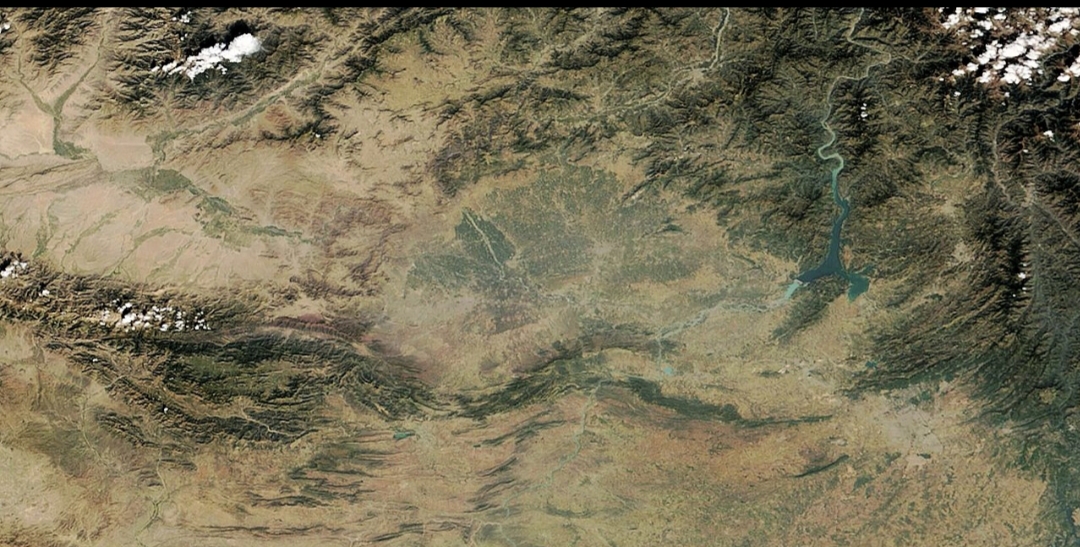
Satellite view of erstwhile Gandhara, October 2020 shows a desolate countryside.


           Bamiyan: Buddha statue, photo @ Thewait 1974.


  Destruction of Bamiyan Buddha, 2001, Photo@ Taysir Alony.


           Empty niche of Bamiyan Buddha.


Rome vs Persia, 260 AD.

  In 260 AD, the unthinkable happened. The Roman Emperor Valerian I was captured alive by the Sasanian Emperor Shapur I, following the Battl...